
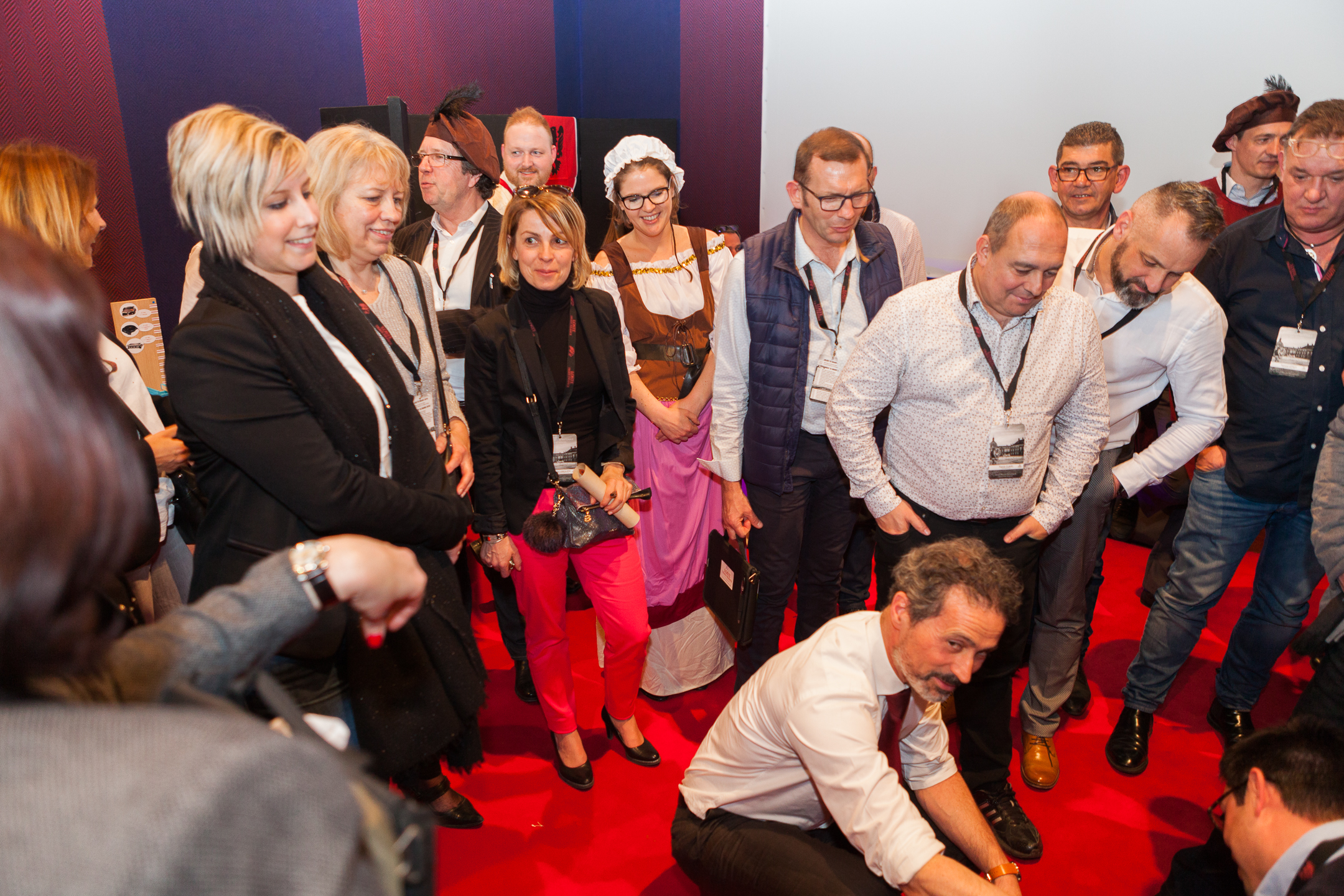
Creating a more inclusive workplace is a complex task that cannot be fulfilled only with policies, statements or occasional communication campaigns. Employees need opportunities to understand disability, question their assumptions and reflect on the way everyday professional practices can exclude some of their colleagues. Disability awareness games offer companies a more engaging way to open this conversation. Through collaborative challenges, realistic scenarios and facilitated discussions, participants can explore accessibility, communication and inclusion without reducing disability to a purely theoretical subject. Want to know more? Discover everything you need to know about these games on this post.
Why companies should invest in disability awareness?
Disability may concern employees, job applicants, customers, service providers or business partners. And is some disabilities are immediately visible, many others are not apparent to colleagues or managers. The realities covered by the term are diverse and cannot be approached through a single stereotypical representation. For companies, disability awareness is therefore an important component of a broader inclusion strategy. It helps employees move beyond assumptions and better understand how professional environments, processes or behaviors can create unnecessary obstacles.
A lack of awareness can affect many aspects of working life. Recruitment practices may unintentionally disadvantage certain candidates. Meetings, training courses or internal tools may not be accessible to everyone. Employees may hesitate to discuss their needs because they fear being misunderstood, judged or treated differently.
Awareness initiatives can help create a more open environment. They give employees a shared vocabulary and make it easier to discuss accessibility without embarrassment or awkwardness. They also encourage teams to consider inclusion before a problem occurs, rather than waiting for an employee to encounter a barrier.
The benefits extend beyond employees who identify as disabled. Many accessibility practices improve the experience of the whole workforce. Clearer information, flexible communication, accessible digital tools and better-organized meetings can benefit people with different working styles, temporary health conditions or personal constraints.
Investing in disability awareness also contributes to the coherence of the company’s values. An organization cannot credibly promote inclusion externally if its employees do not understand how to apply it in their daily decisions.
Custom disability awareness experiences with Collock
At Collock, we design tailor-made disability awareness experiences for companies seeking a participative alternative to traditional presentations. Every organization has its own level of maturity, internal culture and inclusion priorities. A generic workshop may not address the situations employees actually encounter. This is why our projects begin with an analysis of your objectives and professional context.
A disability awareness game can focus on different themes, including accessible communication, recruitment, workplace organization, digital accessibility, collaboration or the handling of inappropriate comments and assumptions. Participants may be placed in realistic scenarios in which they must review a company process, identify barriers or make decisions affecting fictional employees. They might examine the accessibility of a meeting, improve an onboarding journey or respond to a situation in which a colleague expresses a specific need.
The experience can also explore invisible disabilities. This helps participants understand why it is inappropriate to assume that someone does not need support simply because no disability is immediately apparent.
Our role is to create sufficient distance for participants to reflect without trivializing the subject. We avoid activities that claim to simulate the experience of disability through superficial restrictions. Such exercises can oversimplify complex realities and reinforce stereotypes rather than challenge them. Instead, we focus on environmental barriers, professional situations and the decisions employees can influence.
Collock designs digital experiences for whom the tone, complexity and duration are adapted to the participants, whether the audience consists of managers, recruiters, operational teams or the entire workforce. The content can also be connected to your existing inclusion commitments.
The benefits of gamification for prevention
Disability awareness is sometimes approached through information-heavy training. While factual content remains necessary, passive formats may not be sufficient to influence behavior. Gamification introduces interaction and decision-making into the learning process. Participants must interpret a situation, exchange ideas and decide how to respond. This active involvement encourages deeper reflection than simply listening to recommendations.
Games also make it possible to address uncertainty. In real professional situations, employees do not always know what language to use or how to react. A fictional scenario gives them an opportunity to test responses, discuss alternatives and learn without exposing an actual colleague to an uncomfortable interaction.
Another benefit is the collective dimension. Inclusion does not depend only on HR departments or disability representatives. It is shaped by everyday decisions across the organization. A collaborative game allows participants to see how responsibilities are shared between managers, colleagues, recruiters and support functions.
Gamified awareness can also make abstract concepts more concrete. Accessibility, reasonable adjustments or inclusive communication may remain vague until participants encounter a specific scenario. Once a barrier is visible within the game, it becomes easier to understand how it could appear in a real workplace.
Emotional engagement can improve memorization, but the experience must remain respectful. The aim should never be to generate discomfort for its own sake or turn disability into a dramatic storyline. Effective gamification uses curiosity, cooperation and problem-solving to support learning. When these conditions are met, gamification becomes a valuable prevention tool. It helps companies address inappropriate behaviors, identify barriers and encourage more inclusive reflexes before difficult situations arise.
Need more information?
Choosing the right disability awareness format depends on several factors: the employees concerned, the issues already identified and the broader inclusion strategy of the company. Before designing an activity, it is useful to clarify the desired outcome. Do you want to introduce the subject to the whole workforce, support managers, improve recruitment practices or address accessibility within a specific process?
Collock can work with your HR, diversity and inclusion, training or internal communication teams to design a suitable approach. We adapt the experience to your culture while preserving the seriousness and complexity of the topic.
Want to know more or benefit from our experience? Contact us and let’s design the custom disability awareness game you need.
Frequently Asked Questions
What is a disability awareness game?
It is an interactive learning experience designed to help employees understand disability-related barriers, question assumptions and develop more inclusive professional practices.
Can a game accurately simulate disability?
No activity can reproduce another person’s lived experience. Effective awareness games focus on workplace barriers, decisions and behaviors rather than claiming to simulate disability itself.
Who should participate in disability awareness training?
All employees can benefit, but specific experiences may also be designed for managers, recruiters, HR teams or customer-facing staff.
Can invisible disabilities be addressed?
Yes. Awareness programs can explore situations involving needs that are not immediately visible and encourage employees to avoid assumptions.
Why use a game instead of a traditional presentation?
Games increase participation and allow employees to examine realistic situations, make decisions and discuss different responses.
Can disability awareness games be delivered remotely?
Yes. Digital and hybrid formats can be designed for distributed teams while preserving interaction and facilitated discussion.
Are Collock’s experiences customizable?
Yes. The scenarios, messages and format can be adapted to your company’s objectives, audience and existing inclusion initiatives.
