
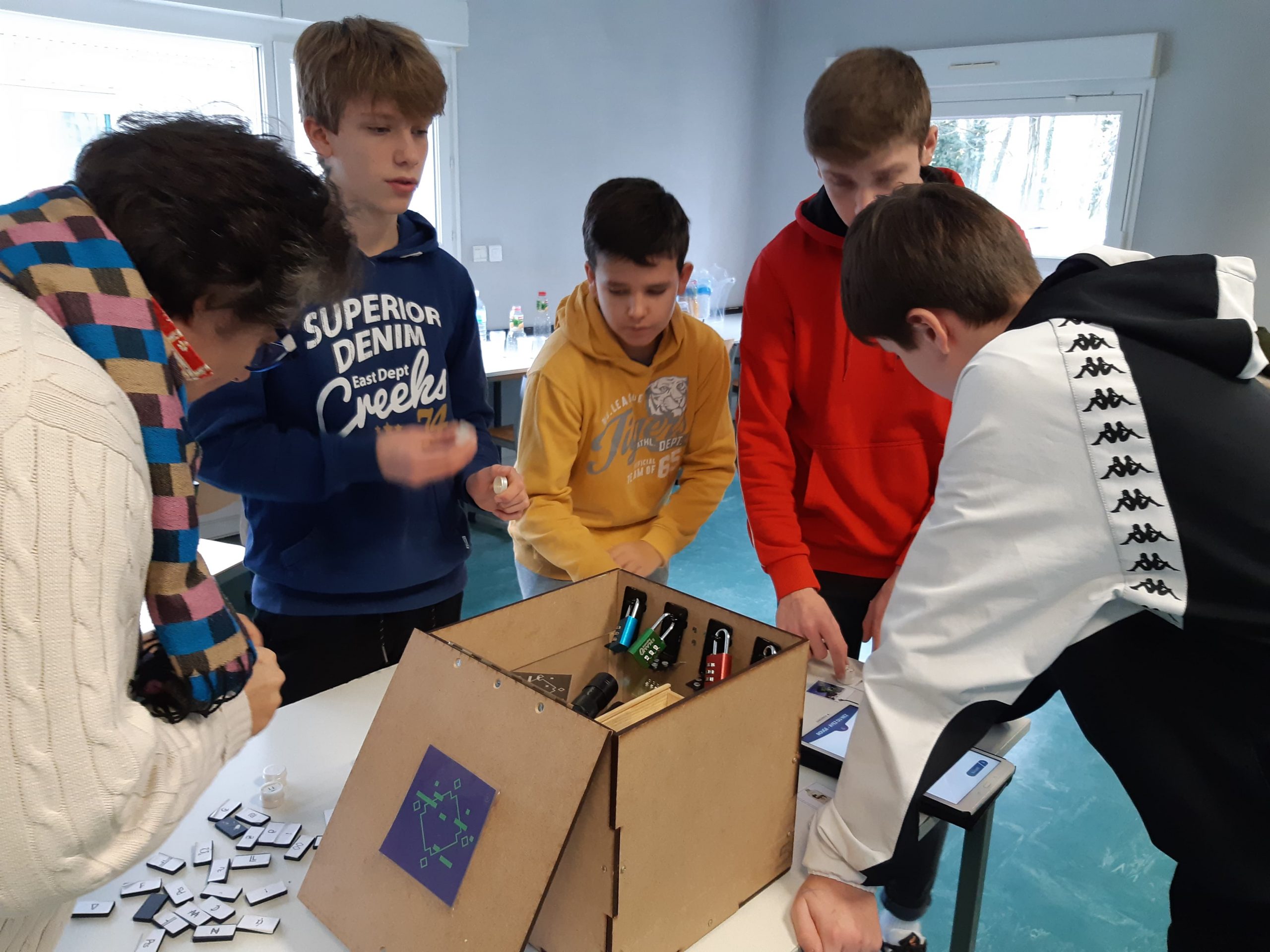
Are you a training manager or HR professional? Then you’ve probably already noticed a growing problem in the professional world: candidates losing interest in traditional training sessions. Too monotonous, these sessions lose the candidate along the way, meaning only a portion of the information conveyed is retained. So, how can we address these challenges? One option is to consider using gamification in training solutions. Collock tells you more.
The challenges of training in modern corporate settings
In an increasingly fast-paced world, corporate training faces a dual challenge: ensuring the transmission of essential knowledge while engaging learners whose attention is constantly solicited. Traditional training formats now struggle to meet these expectations. Monotonous presentations, lack of interactivity and limited learner involvement significantly reduce the effectiveness of training sessions. And so, the result is a superficial retention of information and a minimal impact on behavior or skills.
Beyond the format itself, companies must also address issues of motivation, commitment and engagement. Employees may perceive training as a constraint or a formality, rather than as an opportunity for personal and professional growth. In this context, innovation in training methods is a strategic necessity. And gamification in training stands out as one of the most promising approaches to meet this demand.
Want to know more? Collock tells you everything you need to know!
Gamification as a solution to capture audience interest
Gamification consists of applying the principles of game design to a non-game context, such as corporate training. The idea is not to play for fun alone, but to leverage game mechanics (challenges, rewards, competition, storytelling…) to make the learning process more dynamic and appealing.
By stimulating curiosity, competitiveness and the desire to succeed, gamification creates a more engaging environment. Learners become active participants rather than passive spectators. This change in posture profoundly modifies the relationship with the training content: it is no longer something one must endure, but a challenge to overcome.
Moreover, gamification promotes immersion and emotional involvement, two key factors in improving long-term memory. Through interactive experiences, participants experience real situations, make decisions, measure the consequences of their choices and learn through action. This “learning by doing” approach helps generate a deeper and more lasting acquisition of skills.
The advantages of gamification in corporate training
The benefits of gamification are multiple. First, it increases attention and participation rates. When training becomes a game, learners are more focused, motivated to complete their tasks and more inclined to persevere in the face of difficulty. This increased engagement translates into better knowledge retention and greater learner satisfaction.
Second, gamification encourages collaboration and collective intelligence. Many game formats involve teamwork, requiring players to communicate, coordinate and support each other. This dynamic is particularly valuable for developing soft skills such as communication, leadership or conflict resolution.
Gamified training can also provide real-time feedback. Points, scores or progression indicators help learners assess their own performance and identify areas for improvement. This feedback loop encourages autonomy and fosters a continuous improvement mindset.
Finally, gamification enables better alignment between training and company objectives. By designing tailored experiences, it is possible to simulate real work situations, illustrate complex processes or raise awareness on key issues (compliance, cybersecurity, inclusion…). This relevance strengthens the usefulness and impact of training.
Examples of gamification solutions
Gamification can take many forms, depending on the needs, audience and learning objectives. Here are a few examples of effective applications:
- Escape games: These immersive scenarios encourage cooperation and problem-solving under time constraints. They are ideal for reinforcing teamwork, decision-making or stress management skills.
- Serious games: Digital games specifically designed for training purposes. They allow participants to interact with content, explore options and face the consequences of their decisions in a safe environment.
- Quizzes with point systems and rankings: A simple yet effective way to stimulate healthy competition and consolidate knowledge in a fun format.
Have Collock design a custom gamified training program
If you are a training manager or HR professional, you may believe that training should never be boring, and that’s what we believe too at Collock! That’s why our team of experts designs gamified training solutions tailored to your strategic challenges and your teams’ learning needs. Whether your goal is to facilitate the onboarding of new employees, raise awareness about cyber risks, support change management or develop soft skills, we co-create experiences that combine meaning, engagement and impact.
Our methodology relies on in-depth analysis of your objectives, co-design workshops and an agile development. From concept to deployment, we support you in creating powerful and engaging training moments. Thanks to our experience in designing serious games and our wide variety of formats, we can adapt to all contexts, all levels of the company and all learning goals.
Ready to revolutionize your training? Let’s build the game together.
Frequently Asked Questions
Is gamification effective for all types of training?
Yes, provided that the format is adapted to the content and the audience. Gamification can be used in soft skills training, technical learning, onboarding, compliance awareness and many more areas.
How do you measure the impact of gamified training?
It is possible to measure engagement (participation rates, completion), knowledge acquisition (quizzes, assessments) and behavior change (observation, feedback).
Can gamification work for remote teams?
Absolutely. Many of our gamified formats are accessible online and suitable for remote or hybrid work environments.
