
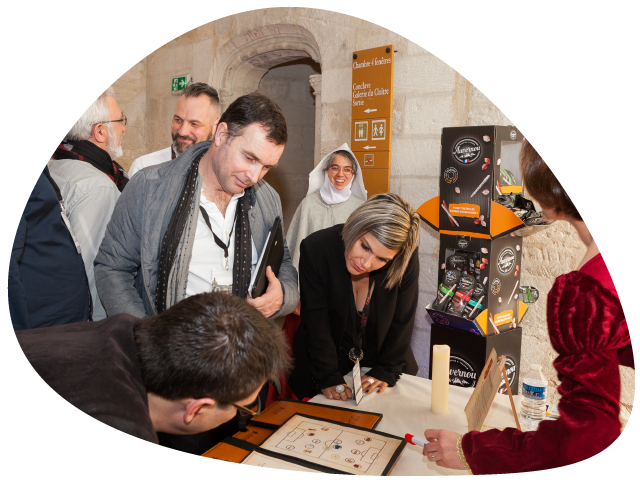
Within a company, changes are frequent, whether due to the arrival of new management candidates, necessary internal reorganizations, or process changes to improve efficiency. However, if these changes are poorly managed, presented, or implemented, they can encounter resistance from employees, slowing down their success. Therefore, to improve change management within your organization, you can consider exploring innovative communication methods such as change management games for employees.
Understanding change management in a few words
Change management refers to the approach a company takes to transition individuals, teams and the organisation as a whole from a current state to a desired future state. Whether it’s a reorganisation, the implementation of new tools, a cultural shift or the launch of a new strategy, change can challenge habits, perceptions and established routines.
A well-handled change process helps mitigate resistance, preserves employee engagement and reduces productivity loss. On the contrary, poorly managed change can lead to demotivation, confusion or even turnover. For this reason, companies are increasingly investing in structured support tools to manage these pivotal moments.
Change in business: a recurring and inevitable moment
Today’s business environment is more dynamic than ever. Market transformations, digital transformation, regulatory evolutions or internal restructurings all contribute to making change a recurring event rather than an exception.
Nevertheless, even when justified or well prepared, change is often met with resistance. Humans naturally seek stability and any disruption to the familiar can generate stress or anxiety. Employees may feel excluded from the decision-making process, may not grasp the objectives or may worry about their future role. Communication alone is not always enough to overcome these hurdles.
What is needed is an approach that is both informative and participative. Employees must be given the tools to understand the reasons for the change, its implications and how they can contribute to its success. This is precisely where serious games can play a transformative role.
How can games be used for change management?
Serious games offer a unique space to simulate, embody and understand change in a concrete and engaging way. Far from trivialising serious topics, they allow employees to explore situations in a safe environment and learn through experience.
For example, a game can reproduce a scenario in which a team must adapt to a new organisation, a new tool or an evolving client expectation. Players are invited to take decisions, collaborate, face challenges and observe the consequences of their actions, all while immersed in a story that mirrors their workplace reality.
This experiential format fosters emotional involvement and facilitates learning. It allows teams to:
- Better understand the why behind the change;
- Identify their role in the new system;
- Express their concerns in a constructive setting;
- Test new behaviours without fear of failure;
- Strengthen team cohesion through shared experience.
Beyond knowledge, serious games become a starting point for broader conversations within teams, between managers and employees and across departments. By using gameplay to break down resistance, companies can generate more engagement and accelerate adoption.
Collock designs custom change management games for employees
The Collock team believe that every change management context is unique and deserves a tailor-made experience. Our team works hand in hand with HR departments, transformation leaders and communication experts to create games that address your specific challenges.
We begin by analysing your organisational context, goals and potential sources of friction. Based on this, we design a serious game with the right mechanics, tone and storyline to fit your culture and strategic objectives.
From immersive escape games to collaborative board games or digital simulations, each format is chosen for its ability to drive participation and reflection. We ensure that the experience remains accessible, engaging and aligned with your values.
After the game, we facilitate a debriefing session to help participants connect the experience to their everyday work reality. This step is key to translate insights into actions.
Collock’s approach ensures that change is not simply announced, but experienced, understood and co-constructed.
Frequently Asked Questions
What types of change can be addressed with serious games?
Organisational changes (mergers, restructures), technological changes (new tools, digitalisation), cultural shifts (new values, ways of working) or strategic pivots can all be supported by serious games.
Who are these games intended for?
All employees can benefit from this approach, from top management to operational teams. Games can also be adapted to suit specific populations such as field workers, support functions or managers.
Is it possible to customise the game to our company’s context?
Absolutely. Every Collock game is custom-designed to reflect your organisational challenges, culture and vocabulary.
How long does it take to develop a change management game?
Depending on the complexity of the project, development can take between a few weeks and several months. Collock works closely with your teams to define a realistic and efficient schedule.
Can the game be played remotely?
Yes. We offer both in-person and digital game formats to suit hybrid work environments.
What are the measurable benefits?
Greater employee engagement, better understanding of change objectives, improved collaboration and more constructive feedback loops are among the observed benefits.
If you would like to learn more about change management games for employees, discuss with our team, or get a quote for possible support, don’t hesitate to contact us.
